Dubai · UTC+4

Web design & development in Dubai.

CoocCool Information Technologies (CCIT) is a website design and development company in Dubai. We design and build fast, mobile-first websites and web applications that earn their place, design the interfaces people actually use, automate the work nobody should be doing by hand, and put AI where it has a job to do. Based in Al Fahidi, working with businesses across Dubai, Abu Dhabi, Sharjah and the wider UAE.

  • 05

    Disciplines

  • AA

    Accessibility floor

  • 100%

    Yours at handover

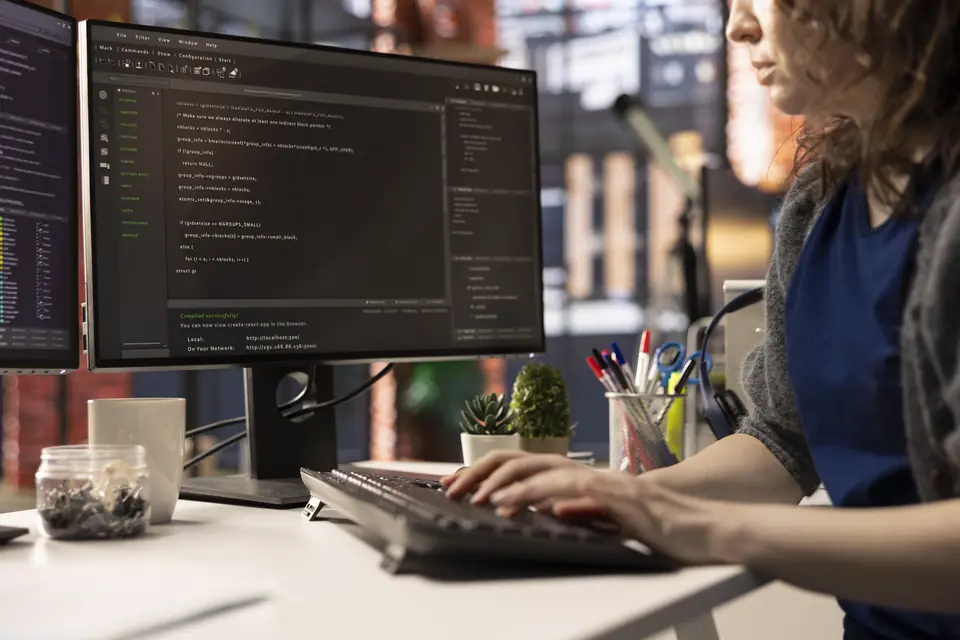
Web developer writing code on a desktop monitor during website development
FIG.01Code, written to last

01Services

Web design and development, WordPress, maintenance, automation and AI.

Five disciplines, one Dubai team. Most work touches more than one of them. They are listed separately because they are scoped and priced separately, not because they happen apart.

01

Web design and development
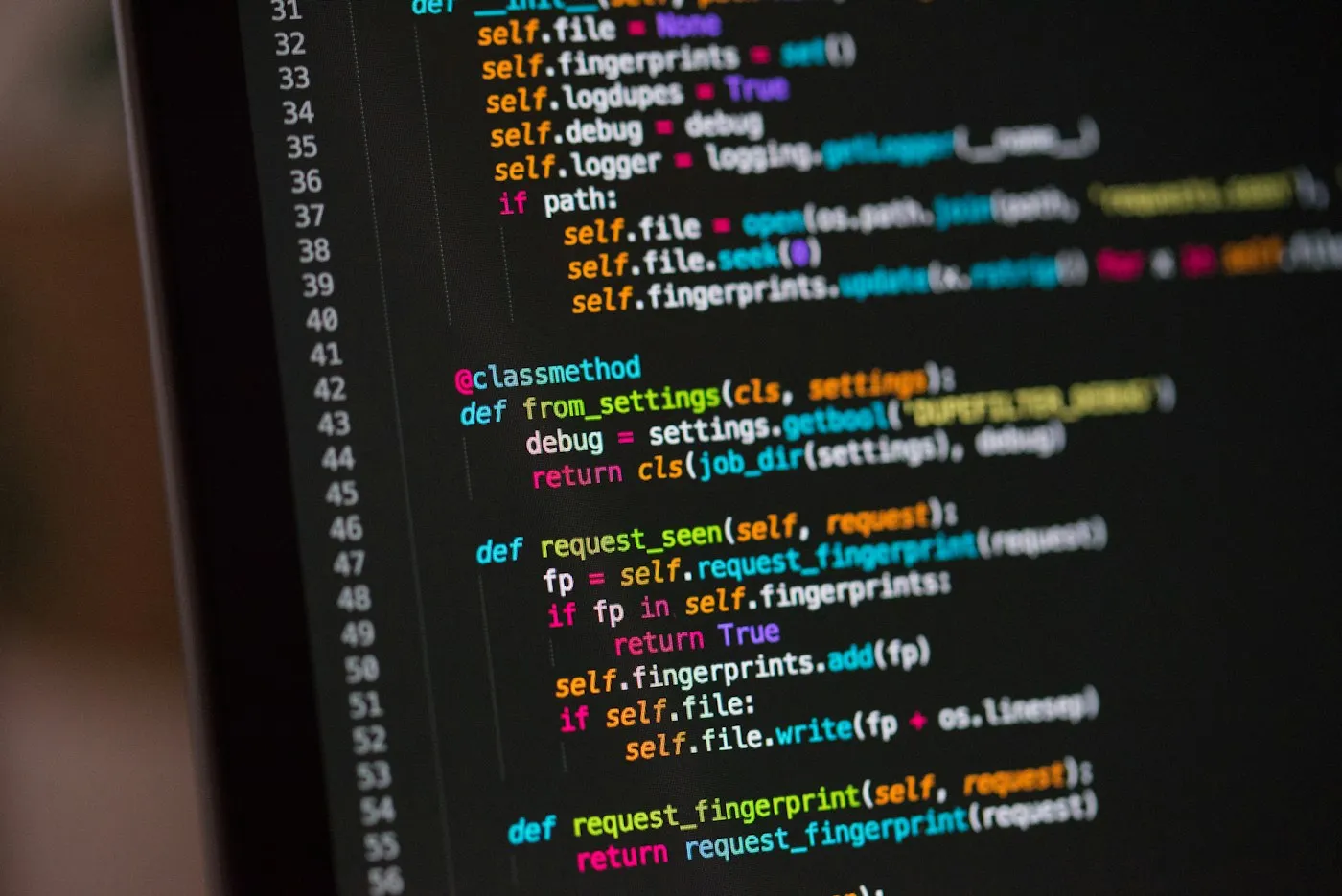
Source code on a dark editor screen, viewed at an angle
FIG.02Written to be read later

Web design and development is the planning, design and building of websites and web applications, together with the systems behind them and the hosting they run on. From company websites and e-commerce stores to landing pages and custom web apps, built on WordPress or custom code, we design and develop them in Dubai for businesses across the UAE.

Every site is designed mobile-first, responsive at every screen size, and built SEO-ready, with semantic HTML, structured data and clean URLs from the first page. Speed is a decision made during the build, not a thing tuned afterwards. Pages render on the server where that matters, ship as little script as they can, and are measured against Core Web Vitals on a throttled connection rather than on a fast laptop. Accessibility is settled the same way, during the work rather than in an audit at the end. What you are left with is a codebase a different developer could open next year without dread.

Call us when

  • The site is slow on phones and nobody can say why
  • You have been quoted for a rebuild when a repair might do
  • The codebase is frightening to change, so nobody changes it
  • You need a dashboard or an internal tool, not a brochure
  • Your website no longer reflects the business, or ranks nowhere

You receive

  • The deployed site or application
  • Full source and repository access
  • Hosting, domain and service accounts in your name
  • Documentation written for someone who has never seen it
  • Performance and accessibility measured before and after
  • Responsive, mobile-first design and technical SEO built in

02

WordPress, maintenance and website security

Laptop showing the WordPress logo, for WordPress maintenance and website security
FIG.03Patched, backed up, watched

Website maintenance is keeping a site and the server under it updated, backed up, secure and fast after launch. That covers WordPress support and maintenance, server maintenance, website and server migration, and malware and virus removal when a site has been hacked.

Most hacked WordPress sites in Dubai were not broken into by anything clever: an outdated plugin, a forgotten admin account, or a shared server nobody has looked at in years. We take over existing WordPress and custom-built websites and keep them healthy with core, theme and plugin updates tested before they go live, backups that have actually been restored, and server maintenance with uptime monitoring. When a site has already been hit, the malware is removed from the files and the database, the way in is found and closed, and Google is asked to review the site once it is clean. Website and hosting migrations are planned so that URLs, email and search rankings survive the move.

Call us when

  • Your WordPress site has been hacked, redirects visitors, or is flagged by Google
  • WordPress core and plugins have not been updated in months
  • You need to move to a new host or server without losing email or rankings
  • Nobody is sure who has access to the server, or whether the backups work

You receive

  • Malware and virus removal, with the entry point found and closed
  • WordPress core, theme and plugin updates, tested before they go live
  • Scheduled backups, and a restore that has been tested
  • Website and server migration with redirects and DNS planned
  • Uptime and security monitoring, with alerts to a person
03

UI/UX and interface design

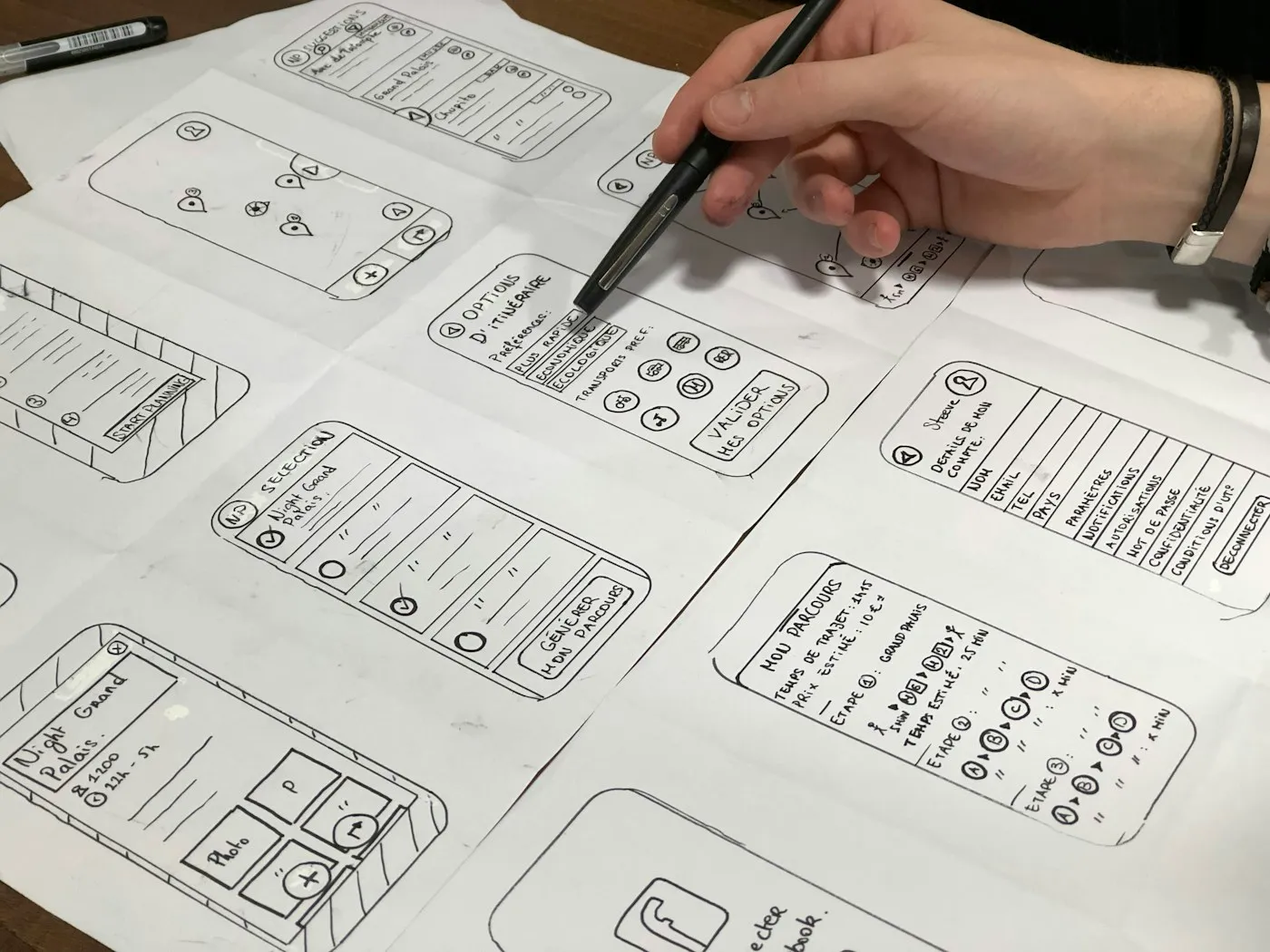
A hand sketching mobile interface wireframes on paper
FIG.04Every state, on paper first

Interface design is the work of deciding how a product behaves: its flows, its states, and the order in which a person meets them.

A picture of a screen is the easy half. The rest is the empty state before any data exists, the wording of the error, the order the keyboard moves through, and what happens at 360 pixels wide with the text scaled to twice its size. Much of this is settled in the browser rather than in a design file, because that is where it is true. A design system gets built when a product is going to keep growing, and not before.

Call us when

  • People ask support how to do something the product already does
  • Every new screen looks like it came from a different product
  • It was designed for desktop and mobile was fitted in afterwards
  • You need an accessibility audit you can actually act on

You receive

  • Designs covering the real states, not only the happy path
  • Flows and information architecture
  • A design system where one is warranted
  • Prototypes for the interactions worth testing first
  • An accessibility audit naming element, rule and fix
04

Automation

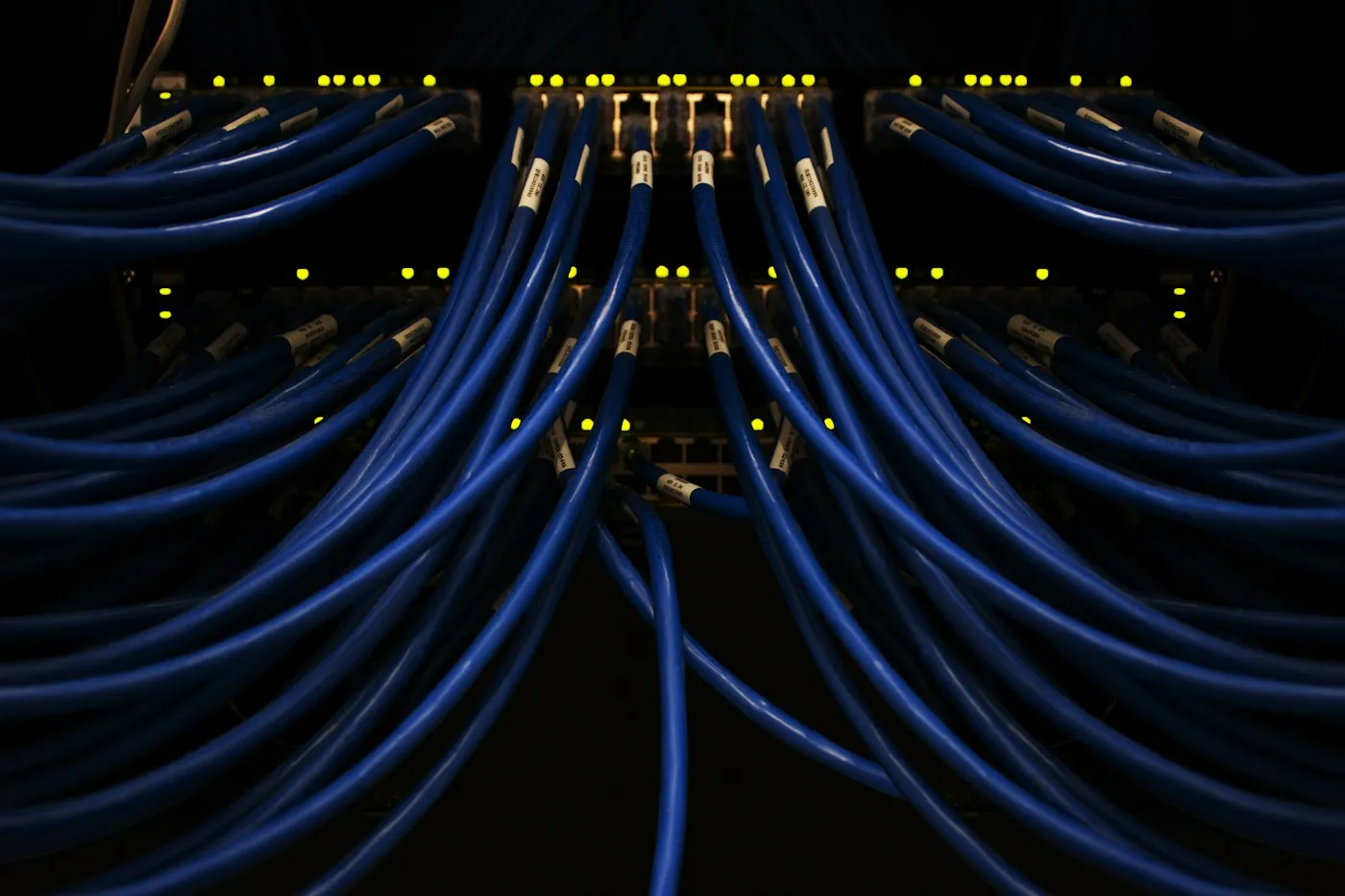
Blue network cables patched into a row of switch ports
FIG.05Systems, wired together

Automation is software doing the repetitive manual work of a business unattended, and reporting its own failures when it cannot.

Nearly every company pays a quiet tax: someone retyping rows from one system into another, a report rebuilt by hand every Monday morning, an approval sitting unread in an inbox. The work starts by mapping what actually happens, which is rarely what the process document says. Then the parts that were never worth a human go away. Then it is instrumented, because an automation that fails in silence is worse than the manual step it replaced.

Call us when

  • Somebody copies data between two systems every week
  • A report is rebuilt by hand on a schedule
  • Work waits in an inbox and nobody knows it is waiting
  • A scheduled job had been failing for weeks before anyone noticed

You receive

  • A written map of the process as it really runs
  • The automation, deployed and scheduled
  • Alerting when it fails, to a person who will see it
  • Logs of what ran and what it touched
  • Documentation of how to change it
05

AI integration

A processor chip marked AI among other components on a circuit board
FIG.06One task, measured

AI integration is placing a model inside a system you already run, to perform one defined step whose success you can measure.

The useful question was never whether AI can be added. It is which task, judged by which measure, failing in which way. A model that is right nine times in ten is fine for drafting a reply and unacceptable for posting to a ledger, and the difference is where you put it in the process rather than which model you picked. So the work is narrow on purpose: retrieval over documents you control, a scored set of cases you can re-run, and a person in the loop wherever being wrong would cost real money.

Call us when

  • Staff retype the same fields out of PDFs, invoices or forms
  • The answer exists in your documentation and nobody can find it
  • You have been asked to add AI without a task attached
  • A pilot impressed everyone and never left the demo

You receive

  • A working integration inside the system you already use
  • Retrieval grounded in your own sources, where that applies
  • An evaluation you can re-run and read yourself
  • Guardrails and a human review step where error is costly
  • A written account of what it decides and what it must not

02Method

How the work runs.

Four steps. The second one is the one most agencies will not put in writing.

  1. 01

    Scope

    We start at the problem rather than the solution. What breaks today, who it costs, and what fixed would look like well enough to recognise. If the honest answer is that you do not need this work, you get told that instead of a proposal.

  2. 02

    Budget

    You name the number the work is worth to you. We come back with what fits inside it and what does not, written down, before anything begins. No hourly surprises and no scope that quietly grows on the way through.

  3. 03

    Build

    Short cycles, each ending in something that runs in a real environment rather than a status report. Decisions that are expensive to reverse get made early, while changing them is still cheap.

  4. 04

    Hand over

    The source, the repositories, the accounts and the documentation all transfer to you. We are glad to keep maintaining it. You should never be stuck with us because leaving would be difficult.

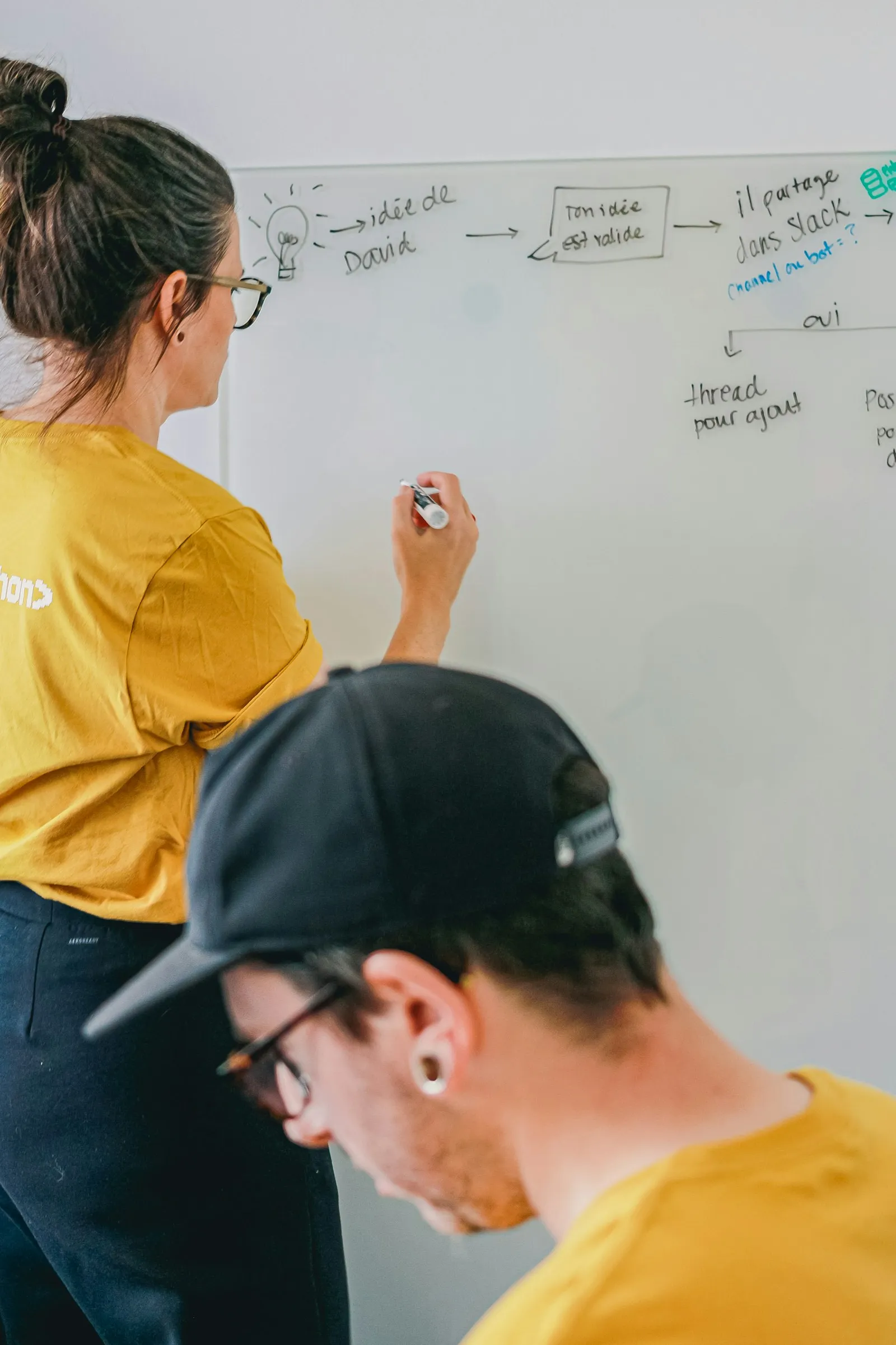
Two people mapping a process as boxes and arrows on a whiteboard
FIG.07Drawn before it is built

03Budget

You set the budget.

There is no rate card here, because a rate card prices our time rather than your problem. Tell us what solving it is worth, and the scope is fitted to that number and written down before a line is committed. If the number cannot buy something worth having, we will say so rather than sell you a smaller version of the wrong thing.

Start a project
  • You name the figure

    Not an estimate that drifts. The number you give is the number the scope is built to.

  • In writing, before work starts

    What is included and what is not, agreed while it still costs nothing to change.

  • The honest no

    If the work is not worth doing, that is the answer you get. It costs us a project and saves you one.

The arithmetic of a small manual task

Twenty minutes of manual work, costed over a year. This is arithmetic rather than a claim about anyone's results.

Twenty minutes, once a week
17 h
Twenty minutes, every working day
83 h
The daily version, in working weeks
2 wk

04Handover

Everything is yours when it ends.

Lock-in is usually built by accident: an account in the agency's name, a server only they can reach, a codebase nobody else can read. All three are avoidable, so we avoid them.

Handover manifest

05 items

  1. 01The full source and the repository history
  2. 02Hosting, domain and third-party service accounts, in your name
  3. 03API keys and credentials, transferred rather than shared
  4. 04Documentation written for a stranger, not a reminder for us
  5. 05The measurements taken before and after, so you can check the work

Transferred at completion

05FAQ

Questions worth asking first.

01What does CCIT do?

CoocCool Information Technologies (CCIT) is a web design and development company in Dubai. We design and build websites, e-commerce stores and web applications, design product interfaces, automate repetitive business processes, and integrate AI into systems a company already runs. You can reach us on +971 52 172 2638 or at it@cooccool.ae.

02How much does website design cost in Dubai?

There is no rate card. You tell us what the website or project is worth to you, and we come back with what fits inside that budget and what does not, in writing, before anything starts. If the figure cannot buy something genuinely useful, we say so rather than build a weaker version of it.

03Where are you based, and do you work outside Dubai?

We are at 5 Al Hisn St, Al Fahidi, Dubai, on UTC+4. We work with businesses across the UAE, including Abu Dhabi, Sharjah and Ajman, and the work suits remote delivery, so location is rarely the deciding factor. Decisions get written down rather than left in a call, which is what makes distance workable.

04Do you redesign existing websites or only build new ones?

Both. Website redesigns and picking up an existing site, application or process are ordinary work here: improving performance, fixing accessibility, adding features, or migrating a stack. Where a rebuild is genuinely cheaper than a repair we will say which one you are looking at and why.

05Are your websites mobile-friendly and SEO-ready?

Yes. Every website we design and develop is responsive and built mobile-first, measured against Core Web Vitals on a throttled phone connection, and shipped with the technical SEO in place: clean semantic HTML, one clear heading structure, title and meta tags, structured data, a sitemap and fast load times. That gives search engines a site they can crawl and rank; the content and links that win rankings are then yours to grow.

06Can you remove malware from a hacked WordPress website?

Yes. We remove malware and viruses from the files and the database, find and close the way the attacker got in, update WordPress core, themes and plugins, and ask Google to review the site so security warnings are lifted once it is clean. Then we set up backups and monitoring so the same hole is not left open.

07Can you migrate my website to a new server or hosting provider?

Yes. Website, WordPress and server migrations are planned before anything moves: files, databases, email and DNS, with redirects in place so existing URLs and search rankings carry over. We can also take on ongoing server maintenance and WordPress maintenance once the site is on its new host.

08What does AI integration actually mean in practice?

It means a model performing one defined step inside a system you already use, with a measure of whether it is working. In practice that is usually extracting fields from documents, answering from your own knowledge base, drafting something a person then reviews, or classifying records in a pipeline. It is scoped narrowly on purpose, and a person stays in the loop wherever being wrong would be expensive.

09Who owns the code and the accounts when the project ends?

You do, all of it. Source, repository history, hosting, domain, third-party service accounts and API keys transfer to you at handover, along with documentation written for someone who has never seen the project. Ongoing maintenance is available, but nothing is arranged so that leaving would be hard.

10How do we start?

Send a message on WhatsApp, call +971 52 172 2638, or email it@cooccool.ae with a sentence or two about what is not working. The first reply is usually questions rather than a quote, because a number before the problem is understood is a guess.

06Contact

Tell us what is not working.

A sentence is enough to start. We will come back with questions before we come back with a number.

Start a project